Listen & tracks
2 of 30 tracks have a preview · 7 works · 67:51
-
Huitième concert dans le goût théâtralFrançois Couperin 3 movements9:13
- 1 Ouverture 3:39
- 2 Grande ritournelle 2:01
- 3 Air tendre 3:33
-
Septième concertFrançois Couperin 6 movements13:47
- 4 Prélude 1:18
- 5 Allemande 2:29
- 6 Sarabande 3:01
- 7 Fuguéte 3:38
- 8 Gavotte 1:31
- 9 Sicilienne 1:50
-
Huitième concertFrançois Couperin 3 movements4:46
- 10 Air tendre–Rondeau 1:13
- 11 Air léger 1:02
- 12 Loure 2:31
-
Suite en E si mi (E minor)Jacques Hotteterre 7 movements16:09
- 13 Prélude 3:24
- 14 Allemande–La Fontainebleau 2:46
- 15 Sarabande–Le Depart 2:59
- 16 Air–Le Fleuri 1:29
- 17 Gavotte–La Mitilde 1:27
- 18 Menuet–Le Beaulieu & Deuxième 2:39
- 19 Rondeau–Le Lutin 1:25
-
Huitième concertFrançois Couperin 2 movements3:17
- 20 Air 1:01
- 21 Sarabande 2:16
-
Deuxième suite de pièces à deux dessusJacques Hotteterre 7 movements18:11
- 22 Les heureux moments 3:18
- 23 Allemande–La Maréchale de Villars 2:23
- 24 Musette & Menuet 3:19
- 25 Gigue 1 1:41
- 26 Sarabande–La St. Maurice 2:12
- 27 Rondeau 3:47
- 28 Gigue 2 1:31
-
Huitième concertFrançois Couperin 2 movements2:28
- 29 Air léger 1:19
- 30 Air de Bacchantes 1:09
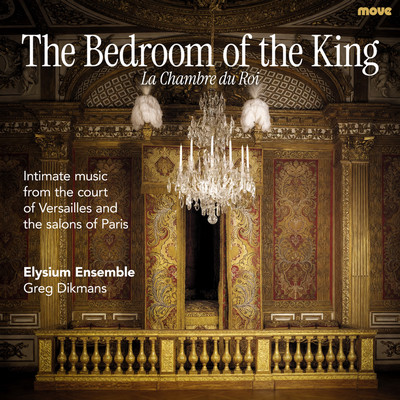
The Bedroom of the King – La Chambre du Roi evokes the intimacy, delicacy, refinement and above all the douceur (‘softness’ or ‘sweetness’) of French chamber music of the early 18th century, especially at the court of Louis XIV.
The Elysium Ensemble – Greg Dikmans (Baroque flute), Ruth Wilkinson (bass viol), Linda Kent (harpsichord) and Lucinda Moon (Baroque violin) – present a programme of François Couperin and Jacques Hotteterre. Both belonged to the Musique de la Chambre du Roi, the elite company that played for the king in his private apartments at Versailles. Their music is elegant conversation: natural charm and sensitive melody, classical beauty of form, delighting the intellect and moving the heart.
In keeping with period practice, Couperin’s Huitième Concert is broken in several places by his Septième Concert and by Hotteterre’s Suite in E minor and Deuxième suite de pièces à deux dessus, so that texture and rhetoric stay varied throughout.
In the artist’s words
This title evokes the intimacy, delicacy, refinement and, above all, the douceur (‘softness’ or ‘sweetness’) of French chamber music of the early 18th century. This is not the music of the grand court spectacles, the ballets and operas of composers such as Lully, which were the public expression of the magnificence of the Sun King (Louis XIV), though much of the musical language of French chamber music is derived from these sources. It is rather the expression of the best of French taste on a more private, human scale, music that requires the listener to become involved, not actively as in dancing in a court ball, but through the use of both the intellect and the heart. This is the music of refined discourse, such a feature of the French salons, where the mind is engaged and delighted by the elegance of the musical ideas and the passions are moved by the simple, natural beauty of the melodies and their agréments (‘graces’) and the sensual sonorities of the instruments on which they are played.
We have followed period practice and taken the further creative decision to embed the three smaller-scale works within the work here performed by the full ensemble. The Huitième Concert can thus be viewed as the main discourse or argument that unifies the whole, with the other works as examples or digressions.
Reviews
The ensemble perform these with a similar poise and style and haunting loveliness.
the first detail that strikes me ... is the vitality of the performance ... The listener is kept interested by the varying of texture and timbre which is at the same still light and transparent ... dynamic playing.
Neither strident nor over-elaborate, the delightful compositions are played with appropriate delicacy ... and recorded with an intimate acoustic.
If there's a word to sum up this CD, it is cheerfulness. The music seems to bounce along, even in the grave moments ... The performance is clean, agile and stylish.
Artists
Elysium Ensemble
ensemble
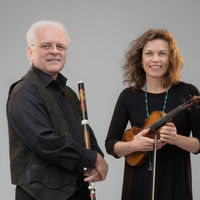
The Elysium Ensemble has been acclaimed by critics for its exciting performances, fine musicianship and authoritative interpretations of Baroque and Classical repertoire on period instruments.

Greg Dikmans
baroque flute
Greg Dikmans is a virtuoso of the baroque flute and recorder, and a conductor, educator and scholar who has long been at the forefront of the Early Music movement in Australia.

François Couperin
composer
François Couperin (1668–1733) was a French Baroque composer, organist and harpsichordist, known as Couperin le Grand. Organist to Louis XIV and to Saint-Gervais in Paris, he remains the supreme French master of the harpsichord.

Jacques Hotteterre
composer
Jacques Hotteterre wrote flute suites and pièces for the private apartments of Louis XIV: music of douceur, elegant conversation and classical form at the heart of early eighteenth-century French chamber style.
Digital booklet
Digital booklet Notes, texts and credits — read online or download the PDF Download the PDFPerformers
- Elysium Ensemble · ensemble
- Greg Dikmans · baroque flute
- Linda Kent · harpsichord
- Ruth Wilkinson · bass viol
- Lucinda Moon · baroque violin
Technical credits
-
Producer
Greg Dikmans
Martin Wright
-
Recording Engineer
Vaughan McAlley
-
Venue
Move Records Studio
-
Thanks to
Arts Victoria
Early Music Studio University of Melbourne
Friends of Elysium
Simone Pérèle
Details
- List price
- $25.00 AUD
- Total playing time
- 67 minutes 51 seconds
- Release date
- 1998
- Categories
- Classical, Early music
- Genres
- Baroque, Early Music
- Musical work copyright
- © 1998 Move Records
- Sound recording copyright
- ℗ 1998 Move Records
- Catalogue
- MD 3184
- EAN
- 9314574318425
More to explore
Venice to Versailles
Venice and Versailles stand for the two dominant Baroque styles in Europe: Venice for the robust, joyous exuberance and barocco character of the Italian manner, and Versailles for the refinement, delicacy, elegance and douceur of the French.
Breath of Creation
Flutes of two worlds. On shakuhachi, baroque flute and recorder, two performers renowned in their own fields join forces in a display of virtuosic delights and evocative sound-scapes.
Exquisite Harmonies
Exquisite Harmonies features works for viola da gamba and harpsichord, and several harpsichord solos, largely from the French Baroque. The exceptions are Telemann, Abel and Australian composer Troy Russell. A nice treat is an improvised harpsichord fantasia in the style of Telemann.

Duos
An extraordinary acoustic frames extraordinary music: Ruth Wilkinson (recorders and bass viola da gamba) and Cynthia O’Brien (baroque violin), the duo known as Capella Corelli, in late Baroque two-part repertoire.
The Pleyel Harpsichord
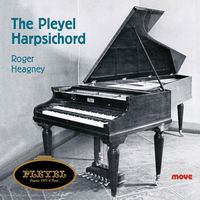
Roger Heagney plays one of the last harpsichords made by the French Pleyel piano company (1963). Founded in 1807, Pleyel built pianos until 2014. The Concert Grand Harpsichord offers a distinctive sound and seven-pedal colour.
Masters of Baroque
Trio Polyphonica was active between 1980 and 1990, with a repertoire spanning more than three centuries. This programme presents Baroque chamber works by Frescobaldi, Hellendaal, Couperin, Leclair, Rameau and Corelli.